Commercial Waste Removal in Spitalfields
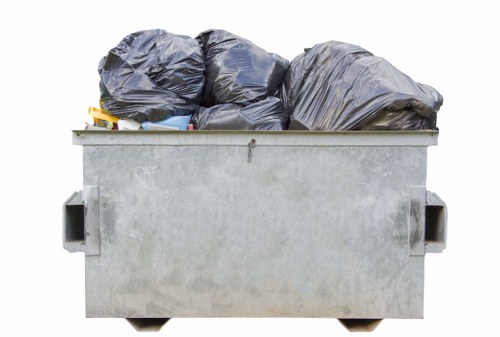
We provide commercial waste removal in Spitalfields for businesses that need a clear, practical way to deal with unwanted office, retail and trade waste. The service is arranged around tidy collection, responsible handling and straightforward communication, so you can keep trading while the waste is taken away. Whether the task involves routine business rubbish, a one-off clearance or bulky items from a working premises, the aim is to make the process organised and manageable.
Our work covers a broad mix of commercial materials, including general workplace waste, packaging, unwanted fixtures and items that have come to the end of their useful life. We can support premises that want a regular clearance pattern as well as sites that need a single visit after a refit, move or stock change. If you are planning a clear-out, tell us what needs removing and we can help shape the right approach.
Many business customers want a service that is simple to organise but still careful about what leaves the premises. We focus on separating suitable items for recovery where possible, while making sure the work remains practical for the people on site. If you need a quote, send over the basic details of the job and we will take it from there.
Office and workplace waste clearance
Office waste removal is often about more than paper and packaging. Desks, chairs, shelving, filing cabinets, screens and other workplace items may all need to go at the same time, and the order of removal can matter when staff are still using part of the space. We can help clear surplus items from open-plan offices, smaller workrooms and shared business units, with attention to access, lift use and keeping disruption low.
When office contents are no longer needed, it is useful to consider what can be reused, what should be recycled and what must be treated as ordinary rubbish. Our service can handle mixed collections with practical sorting at collection stage, which is especially helpful after a relocation, refurbishment or desk replacement. If you already know the volume, a brief inventory of the main items is useful; otherwise, photographs can make the first discussion quicker.
Typical workplace items we collect
Business premises often generate a predictable range of unwanted items. A careful commercial clearance may include:
- office desks, office chairs and task seating
- lockers, cupboards, shelving and filing units
- packaging, archive material and general clutter
- small electrical items and non-confidential equipment
- broken furniture and items awaiting disposal
Shop, hospitality and mixed commercial waste
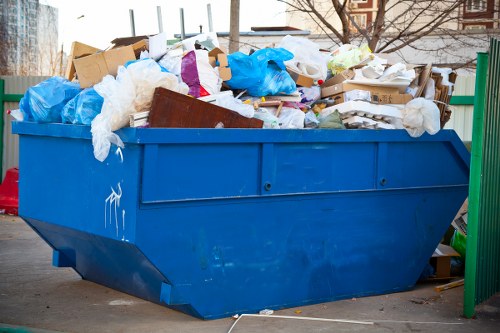
Shops, cafés, salons and other customer-facing premises often need waste removed with care for both appearance and timing. Surplus display stands, damaged furniture, stock packaging and end-of-line items can build up quickly, especially when a business is preparing for a change in layout or a delivery run. A commercial waste collection should fit around trading hours and the movement of customers or staff, rather than creating extra pressure on the day.
For mixed commercial waste, clarity matters. The more precise the description of the material, the easier it is to plan the collection and decide whether specialist handling may be needed for certain items. We can deal with straightforward business waste and a range of bulky non-hazardous items, while keeping the focus on safe removal and sensible sorting. If access is limited, let us know in advance so the collection can be arranged around the site.
Some businesses want to clear a single area, such as a storeroom or back office; others need several parts of the premises tackled together. A good waste removal plan will take account of weight, stacking, walkways and where items are stored before collection. That helps avoid unnecessary delays on the day and makes it easier to separate salvageable items from everything else.
Bulky item removal for business premises
Commercial waste work often includes items that are awkward to move, too large for ordinary bins or simply no longer suitable for the workplace. Furniture, display units, counters, cabinets, fridges and other bulky goods can take up valuable floor space, particularly in busy premises where storage is already tight. Removing them safely is usually about planning the route out of the building and matching the load to the site conditions.
We can help with bulky item removal as part of a wider waste clearance or as a standalone job where the main problem is size rather than volume. Items may need to be dismantled first, and the way they are handled depends on their material, condition and location. Clear access and a brief description help us judge the best approach, but there is no need to overstate the job; a simple, accurate explanation is enough.
Businesses often want to know which items are best separated in advance. In many cases, a sensible approach is to group large items by type, keep walkways open and leave anything potentially delicate or electrical until the collection team is ready to assess it. That keeps the clearance ordered and helps prevent damage to other parts of the premises.
Recycling, sorting and responsible disposal

Commercial waste removal should not be treated as a one-step lift-and-dump process. Different materials behave differently once they leave the premises, and a well-run collection looks for the right handling route for each load. Cardboard, metal, mixed furniture and certain electrical items may all follow different paths, so sensible sorting at collection time helps keep the work efficient and responsible.
Our approach is to keep the process practical for the customer while giving attention to the materials we are taking away. Where items can be separated for recovery, they should be. Where they cannot, they still need to be removed in a lawful and careful way. This is one reason commercial clients often prefer a service that deals with mixed waste rather than asking staff to break everything down themselves.
Useful waste management also depends on what is left behind. After a clearance, premises are usually easier to reset, re-stock or hand over when loose materials, damaged fittings and redundant packaging have been taken away together. If you need to clear a working area in stages, that can be discussed as part of the quote rather than treated as an afterthought.
Pricing factors and quotation details
The price of a commercial waste removal job usually depends on the amount of waste, the type of material, the amount of labour needed and how easy it is to reach the items. A clearance from a ground-floor unit with clear access may be quite different from a job that involves stairs, narrow corridors or multiple collection points. These are the practical details that help shape an accurate quotation.
It is also worth considering whether the work is a simple uplift or part of a larger change on site. Refits, closures, stock changes and office moves often produce waste in several categories, and combining those tasks into one removal can be more efficient than scheduling them separately. If you are comparing options, ask for a clear written estimate based on the actual items rather than a rough guess.
For the smoothest start, prepare a short description of the waste, note any access restrictions and say whether any items need dismantling before removal. That is usually enough for an initial quotation. When the collection is more complex, a bit of extra detail avoids confusion and helps make sure the service suits the site.
About Spitalfields
Spitalfields sits just to the east of the historic core of the City of London and has long been shaped by movement, trade and reinvention. Its name is linked to the medieval St Mary Spital priory, whose land once lay outside the old city walls. Over time, the district became known for markets, lodging houses and the arrival of different communities, including Huguenot silk weavers in the seventeenth and eighteenth centuries. That craft heritage is still visible in the area’s fine terrace houses and the narrow urban grain around Fournier Street and nearby lanes. Later waves of migration brought further change, and the district developed a strong reputation for food, fashion and independent trading.
The modern area is closely associated with Spitalfields Market and with the wider creative district around Brick Lane, Brushfield Street and Bishopsgate. Old and new architecture sit side by side: Georgian buildings, former warehouses, converted yards and newer commercial premises all contribute to a layered streetscape. Christ Church Spitalfields, designed by Nicholas Hawksmoor and completed in the early eighteenth century, remains one of the area’s most notable landmarks. Nearby, the market halls and surrounding streets support a busy mix of retail, dining and small businesses, while the streets themselves retain a compact, walkable character.
Spitalfields also connects closely with the surrounding East End through parks, transport routes and cultural sites. Brick Lane is known for its changing food scene and street life, while nearby green spaces such as Allen Gardens provide a quieter contrast. The area has a reputation for market trading, independent enterprise and adaptability, and its buildings reflect that history in their different scales and uses. That combination of heritage and constant renewal gives Spitalfields a distinctive urban character within central and inner London.
Clearance for refits, moves and changing stock

When a business is changing use, upgrading interiors or reducing stock, waste can appear in awkward bursts rather than as a steady stream. A commercial clearance is then less about routine collection and more about removing the items that are blocking the next stage of work. That may include shelving, counters, packaging, redundant signage or contents from a back room that no longer serve the business.
We can support clear-outs that happen before decorators, fitters or delivery teams arrive, as well as removals that take place after a unit has been emptied out in phases. This kind of job often works best when the premises owner or manager identifies the main priorities first. Start with the heaviest or most awkward items, then group the rest by room or area so the clearance follows a sensible order.
Where a site contains several types of waste, it helps to distinguish between what can go together and what should be kept separate. That makes the work easier to plan and keeps the overall removal more orderly. Commercial customers often value that because it avoids the stop-start feel that can happen when waste is left in loose piles for longer than necessary.
Confidential and sensitive items
Some commercial waste requires extra care because the items are not just bulky but sensitive. Paper records, archived folders, office storage and certain business documents may need a more deliberate handling route than ordinary rubbish. If your premises are clearing old paperwork alongside general waste, it is better to identify those materials early so they can be managed appropriately.
We can discuss a clearance that includes confidential shredding or similar sensitive materials where that is relevant to the job. The key point is that these items should not be mixed casually with ordinary waste. Keeping them separate protects business information and also makes the rest of the clearance easier to process. Do not leave sensitive documents loose with general rubbish if they need a different treatment route.
Other items, such as old equipment or business appliances, may also need a little more thought before removal. The safest approach is to mention anything unusual in advance so the collection can be planned around it. That way, the work is handled in a controlled order and the premises are not left with a half-finished clearance.
How to arrange a commercial waste collection

Arranging commercial waste removal in Spitalfields is usually easiest when the job is described in simple terms: what needs clearing, where it is stored and whether there are any access concerns. If the waste is spread across several rooms, a short room-by-room note can help. If the items are bulky, a photo or two can make the initial discussion easier, especially where stairs, loading space or tight entrances may affect the work.
Before the collection, it is sensible to decide what must stay and what can go, and to make sure the items intended for removal are ready to be moved. That may mean grouping them together or leaving a clear route so the removal is efficient. If the job involves larger quantities, a concise written request helps keep the quotation accurate and reduces the chance of misunderstandings later.
When you are ready to proceed, request a quotation for commercial waste removal and send the details that best describe the work. If you would prefer to speak more generally first, use the plain text version of the same request: ask for a quotation and we can review the practical details with you.
What commercial clients commonly need cleared
Every business generates a different mix of waste, but some categories appear again and again in commercial clearances. Office furniture is one of the most common, especially when layouts change or furniture is replaced in batches. Packaging and store-room clutter also build up quickly, particularly when goods are arriving and leaving at speed. These jobs are usually best handled with a clear plan rather than by trying to move items in an unstructured way.
At the same time, not every piece of unwanted material belongs in the same category. A business might have a few broken chairs, a stack of flat-pack packaging, some unused fittings and several items that need more careful handling. The right service is the one that can take a mixed load without making the customer sort it into unnecessary sub-jobs. That is why straightforward descriptions of the waste are so helpful.
Commercial premises also tend to value predictability in the removal process. Once a collection is booked, it helps if the team knows where the items are, whether anything has to be dismantled and how much access is available. This keeps the clearance efficient and makes it easier for the business to return to normal use once the waste has gone.
Practical choices for busy premises
Busy sites benefit from a waste service that can work around operations rather than interrupt them. That might mean removing waste from a rear access point, taking items from a store area first or clearing one section while the rest of the premises continues as normal. The best arrangement depends on the space itself, the size of the load and the timing of other work taking place on site.
If a business is preparing for fit-out or a handover, the removal may need to happen after shelves, counters or display fixtures have been emptied but before final cleaning begins. In other cases, waste builds up gradually and a more routine clearance is the better answer. One well-timed visit can often be more useful than several improvised attempts to move the same items by hand.
For organisations managing multiple rooms or several kinds of waste, it is sensible to keep the request focused on the items that truly need taking away. That keeps the quotation grounded in the actual job and helps prevent confusion over what will be collected and what will remain in place.