Commercial Waste Removal Spitalfields — Recycling & Sustainability
Commercial waste removal in Spitalfields is evolving to meet the demands of a dense urban centre and a community looking for an eco-friendly waste disposal area. Our approach to Spitalfields commercial waste removal puts sustainable practice at the heart of every collection and transfer, prioritising reuse, diversion from landfill and measurable emissions reductions.We set an ambitious recycling percentage target for all mixed commercial collections: 75% recyclable recovery by 2030, with interim milestones each year to track progress. To reach this target we focus on segregation at source, improved sorting at transfer hubs and targeted reuse partnerships. Key performance goals include:
- Annual recycling rate reporting
- Reduction of residual general waste by 40% by 2028
- Continued fleet decarbonisation to cut transport emissions by 50% per tonne by 2030
Local transfer stations & borough waste separation
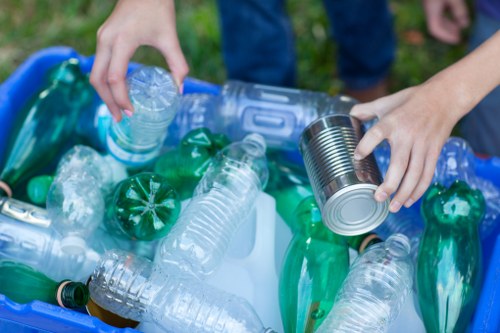
The network of local transfer stations serving East London enables efficient movements of commercial loads from Spitalfields to specialised materials recovery facilities. The boroughs' approach to waste separation — including separate food, paper/card, glass and mixed dry recycling streams — makes it possible to extract higher-value recyclables from business waste. We work within these systems to maintain compliance and to maximise diversion into the circular economy.Low-carbon vans, sustainable fleet and logistics
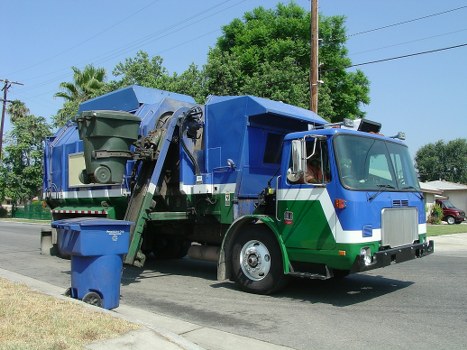
Our low-carbon vans form the backbone of an emissions-aware service. The fleet includes electric and hybrid vehicles alongside efficient diesel models being phased out. Route optimisation, load consolidation and night-time collections where permissible reduce fuel use and congestion. Spitalfields commercial waste removal benefits from this reduced mileage and lower urban emissions.Beyond vehicles, we deploy operational measures such as:
- telemetry and driver training to encourage eco-driving
- modular container systems to cut double-handling
- scheduled maintenance to ensure peak efficiency
 Partnerships with charities and reuse networks are central to our model. Rather than consigning reusable items to refuse, we collaborate with local social enterprises, donation centres and reuse hubs to channel furniture, textiles, electronics and working fixtures back into the community. This not only reduces disposal costs for businesses but also sustains jobs and services in the neighbourhood.
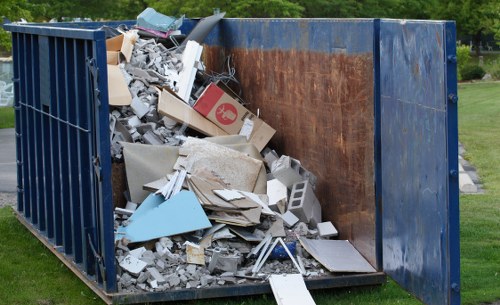
Commercial collections in Spitalfields commonly include waste streams such as glass, paper and card, rigid plastics, food waste, wood, construction rubble and e-waste. Our sorting processes prioritise each material for the most appropriate pathway: recycling, repair/refurbishment, or energy recovery where recycling is not viable. Textile and bulky waste recovery is a growing focus given the area's retail and hospitality sectors.
Local transfer stations and intermediate consolidation points are tailored to handle specific streams. Materials recovery facilities (MRFs) sort dry recyclables at scale while organics are directed to AD (anaerobic digestion) facilities where available. This networked approach means the Spitalfields sustainable rubbish area operates as part of a wider East London circular system rather than as an isolated collection point.
Reporting, transparency and continuous improvement are built into every contract. We publish annual diversion metrics and carbon accounting to demonstrate progress toward the recycling percentage target. Regular audits identify opportunities to improve capture rates and reduce contamination — a common barrier to higher recycling rates in urban boroughs.
 For commercial clients, service design emphasises minimal disruption and legal compliance. Waste transfer notes, manifests and chain-of-custody documentation accompany all collections, ensuring materials are traceable from Spitalfields premises to final recovery facilities. The service also supports tailored bin layouts and internal separation guidance to help businesses align with borough policies on waste separation.
 Community engagement and charity partnerships help turn commercial waste into local value. Donations and targeted reuse projects are coordinated with local charities and social enterprises to extend product lifecycles and support residents in need. The benefits include reduced landfill, lower collection costs for businesses and stronger ties between the commercial sector and the local community.