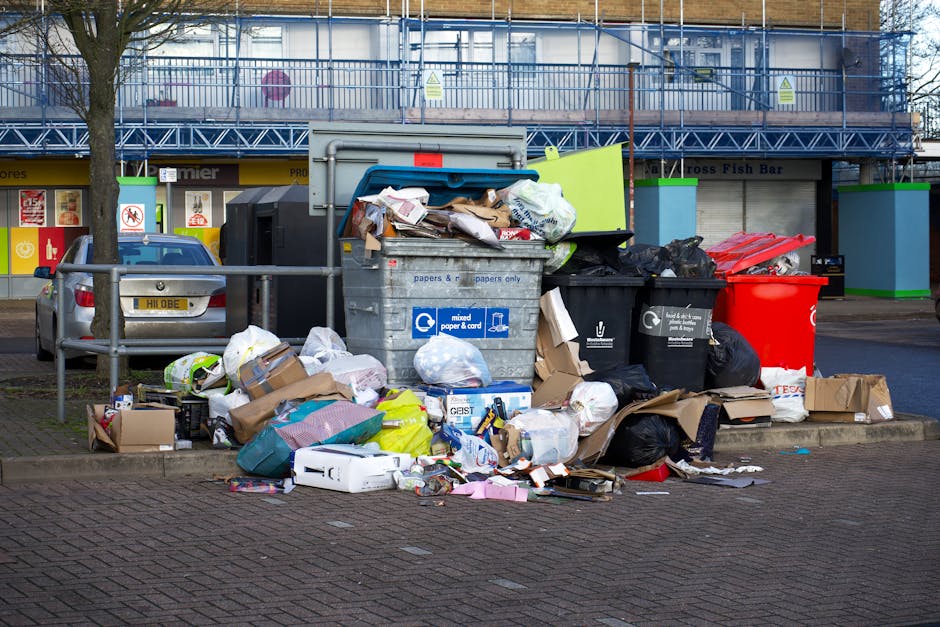
Rubbish collection near Liverpool Street station in Spitalfields: a practical local guide
If you need rubbish collection near Liverpool Street station in Spitalfields, you are probably dealing with one of two things: a build-up you never planned for, or a deadline that suddenly feels very real. Maybe it is office clutter after a refit, bags of flat waste after a move, or a bulky item that will not fit down the stairs without a fight. Either way, the same question comes up fast: how do you clear it quickly, safely, and without turning the day into a mess?
This guide breaks down how rubbish collection works in this part of London, what to expect around a busy station area, which services suit different jobs, and how to avoid the usual headaches. It is written for people who need a sensible answer, not sales fluff. Let's make it straightforward.
Table of Contents
- Why rubbish collection near Liverpool Street station in Spitalfields matters
- How rubbish collection near Liverpool Street station in Spitalfields works
- Key benefits and practical advantages
- Who this is for and when it makes sense
- Step-by-step guidance
- Expert tips for better results
- Common mistakes to avoid
- Tools, resources and recommendations
- Law, compliance, standards, or best practice
- Options, methods, or comparison table
- Case study or real-world example
- Practical checklist
- Conclusion
- Frequently asked questions
Why rubbish collection near Liverpool Street station in Spitalfields matters
Liverpool Street is one of those places where time, access, and foot traffic all matter at once. Spitalfields is busy in a different way too: narrow streets, mixed-use buildings, shared entrances, delivery windows, office turnover, retail stockrooms, and flats above shops. That combination changes rubbish collection more than people expect.
In a quieter area, you might leave waste outside and sort it later. Near Liverpool Street station, that can be a poor idea. Items left too long can get in the way of pedestrians, attract complaints, or simply become harder to move once the street fills up. And with commercial units, there is usually less room to improvise. You need a collection plan that fits the building, the road layout, and the timing.
There is also a trust issue. If rubbish is handled badly, it can disrupt neighbours, staff, customers, or tenants. If it is handled well, the whole job feels invisible in the best possible way. No drama. No lingering smell in the hallway. No awkward "whose waste is this?" conversation. Just cleared.
Expert summary: In a dense area like Spitalfields, rubbish collection works best when the collection team understands access, timing, and item type before they arrive. The waste itself is only half the job; the logistics are the other half.
How rubbish collection near Liverpool Street station in Spitalfields works
The process is usually simpler than people think, but it works best when you prepare a little. In practical terms, rubbish collection is about matching the right removal method to the amount and type of waste. For some jobs, a quick man-and-van style collection is enough. For others, especially office clear-outs, renovation waste, or bulky household items, you need a more structured clearance.
A typical collection starts with identifying what needs removing. Is it general rubbish, mixed waste, furniture, cardboard, broken fixtures, garden cuttings, builders' debris, or something that needs special handling? That first question matters because it affects staffing, vehicle size, loading time, and disposal route.
Then comes access. Near Liverpool Street, access can mean stairwells, loading restrictions, lift sizes, waiting times, or a building manager who wants notice before a team arrives. If waste is coming from a top-floor flat, an office suite, or a basement storage room, it helps to know that in advance. No one enjoys carrying a sofa into a narrow corridor and realising the lift is just a touch too small. Been there, done that, never fun.
For many local customers, the best approach is to combine rubbish collection with a broader clearance service. For example, a flat move might be better handled through flat clearance, while a workplace refresh may need office clearance. If you need a more general approach, waste removal is often the simplest way to describe a mixed collection job.
If you are unsure what can go where, it is worth checking what can go in a skip as a helpful reference point, even if you are not planning to hire one. The practical thinking is similar: separate what is straightforward from what needs special care.
Key benefits and practical advantages
There are plenty of reasons people choose rubbish collection instead of trying to manage waste themselves, especially in a place as active as Spitalfields.
- Speed: A good collection saves you from making repeated trips, queueing for disposal, or waiting around with a van full of waste.
- Less disruption: In busy streets near Liverpool Street station, timing matters. A collection team can work within a tighter window and clear items in one visit.
- Safer handling: Heavy or awkward waste can cause damage to walls, lifts, stair rails, and, frankly, backs. Professional removal reduces that risk.
- Better sorting: Different materials can be separated for recycling or disposal, rather than bundled together and dealt with later.
- More control: You can choose the collection time, ask about access, and focus on the rest of your day.
There is also the mental benefit, which sounds soft until you are standing in a room full of boxes and broken bits. Clearing the waste often changes how a space feels straight away. A cluttered office can seem smaller and more stressful. A cleaned flat suddenly feels possible again. That little shift matters.
For bulky household items, specialist services can make a big difference. If the job includes old seating or bedroom furniture, mattress and sofa disposal can be much easier than trying to deal with them as general waste. If you are replacing worn-out furniture, the right furniture disposal service helps keep the process tidy and efficient.
Who this is for and when it makes sense
Rubbish collection near Liverpool Street station in Spitalfields is useful for a wider range of people than you might expect.
Businesses and offices
Shops, agencies, clinics, cafes, studios, and offices all generate waste that does not wait politely. Packaging piles up. Old stock needs shifting. Desks and chairs outlive their welcome. If your team is trying to stay open while things are being cleared, a planned collection is usually the cleaner option. For ongoing or recurring needs, business waste removal can be a better fit than one-off ad hoc trips.
Residents in flats and converted buildings
Flats near Liverpool Street often come with limited storage, shared entrances, and not much room for bulky items. If you have been putting off a loft sort-out, a hallway clear, or an end-of-tenancy purge, you are not alone. Services like home clearance and house clearance can suit people who want a full tidy-out rather than moving items bit by bit.
Landlords, agents, and property managers
Vacant units need to look presentable quickly. Left-behind waste, broken furniture, and storage-room clutter can slow down viewings and repairs. A practical collection helps reset the space between occupiers. That is especially useful in a high-turnover area, where the next user may be waiting already.
Builders and trades
Small renovation jobs can produce awkward debris long before a skip feels justified. Boards, plasterboard, packaging, offcuts, rubble, and mixed builders' waste all need to go somewhere. In those cases, builders waste clearance is often more suitable than waiting for a skip permit, especially where access is tight or street space is limited.
People with a one-off clear-out
Sometimes the job is just life getting on top of you. Garage overflow, loft clutter, fridge replacement, or a sofa that has seen better days. Nothing wrong with that. It happens. The trick is choosing the service that matches the mess, not the other way round.
Step-by-step guidance
If you want the collection to go smoothly, a little preparation goes a long way. Here is the basic flow.
- List the waste clearly. Separate general rubbish from bulky items, electricals, furniture, and anything sharp or potentially hazardous.
- Estimate volume. Even a rough sense of bags, boxes, or room size helps avoid underestimating the job.
- Check access points. Note stairs, lifts, parking, loading bays, door codes, concierge procedures, and any time restrictions.
- Flag special items early. Fridges, freezers, mattresses, heavy appliances, and hazardous waste can change the handling plan.
- Book a suitable time. In a busy area, early or off-peak slots can reduce friction. Mornings often feel less chaotic, to be fair.
- Keep items grouped together. If possible, place waste in one accessible area so the team can load it efficiently.
- Be ready for a quick walk-through. A good collection usually begins with checking what is going, what is staying, and whether anything has changed since booking.
- Confirm disposal details. Ask how the waste will be handled and whether recyclable materials will be separated.
That last point matters more than many people think. A clear quote is not just about price; it is also about confidence. If the provider explains what is included, what could change, and how access affects the work, you are in safer hands.
For appliance-heavy collections, a dedicated service can help. Fridge and appliance removal is the sort of page people often overlook until a bulky unit is sitting in the corner blocking everything else. Then suddenly, it becomes very relevant.
Expert tips for better results
Here are a few practical tips that make rubbish collection easier in a station-side part of London like Spitalfields.
- Measure awkward items before collection day. Stairwells can be narrower than you remember. It is amazing how often a drawer unit becomes a doorway problem.
- Group by type where possible. Cardboard, metal, furniture, and general waste are easier to process when separated.
- Tell the team about building rules in advance. If there is a concierge, loading bay, or lift booking, mention it early. Saves everyone a headache.
- Use photos if the job is mixed or hard to describe. A few clear images can prevent confusion and save time.
- Think about recycling before the day arrives. If you can identify reusable or recyclable items early, the collection is usually smoother.
- Keep a small clear path. This sounds obvious, but a clean route from the waste area to the exit can cut time dramatically.
A small but useful point: don't bury essential items under the pile you want removed. It sounds funny until your cable box, spare keys, or office records vanish into the wrong bag. Then it is suddenly not funny at all.
If your waste involves confidential paperwork, it may be worth looking at confidential shredding rather than treating documents as general rubbish. That kind of detail is easy to miss in a rush.
Common mistakes to avoid
Most collection problems come from the same few errors. Easy to make, annoying to fix.
- Underestimating the amount of waste. A few extra bags may not sound like much, but they can change the loading plan.
- Ignoring access issues. Parking restrictions, lift limits, and narrow entries matter more in central London than people expect.
- Mixing hazardous and non-hazardous waste. This creates handling issues and may prevent items from being taken with standard rubbish.
- Leaving waste scattered across several rooms. That slows everything down and can make the collection more expensive or less efficient.
- Forgetting about special items. Appliances, mattresses, sofas, and certain builder materials often need separate treatment.
- Assuming every service is the same. It is not. A furniture job, office clearance, and garden clear-out each need different planning.
One more, and this is a big one: don't leave it until the last possible minute if you can help it. Liverpool Street is not the place where a rushed plan feels serene. The whole area has its own pace, and waste collection works better when it fits that pace rather than fighting it.
Tools, resources and recommendations
You do not need complicated tools for a rubbish collection job, but a few basics help a lot.
- Phone camera: Useful for taking clear photos of the waste and access route.
- Measuring tape: Handy for checking doors, lifts, and bulky furniture.
- Marker pens and labels: Great for separating keep piles from remove piles in offices or shared homes.
- Strong bags or boxes: Useful for loose light waste, paper, and smaller items.
- A simple room-by-room list: Better than trying to remember everything on the day.
On the service side, it helps to use a provider that explains pricing clearly and talks openly about disposal methods. Pages like pricing and quotes, recycling and sustainability, and insurance and safety are worth reviewing when you want a better sense of how a company works before you book.
If you are planning a full clean-up rather than just one load, you may also find loft clearance, garage clearance, or garden clearance more relevant than a generic rubbish pickup. Matching the service to the job usually gives a better result. Simple, but true.
Law, compliance, standards, or best practice
Waste collection in London comes with practical and legal expectations, even if the job feels small. The main thing is to make sure waste is handled by a responsible operator and kept separate where needed. In general, you should expect proper handling of rubbish, suitable transport, and sensible disposal routes rather than shortcuts.
For businesses, best practice also means keeping your waste under control, documenting what is removed if needed, and avoiding casual mixing of regular rubbish with special waste streams. If your business produces recurring waste, it is wise to have a routine rather than solving the same problem every week in a slightly different way.
If a job includes items that may be classed as hazardous or need special treatment, do not guess. Ask before collection day. That is especially relevant for old chemicals, certain paints, and similar materials. A cautious approach is the right one here. Better a slightly slower booking than a messy or non-compliant removal.
For everyday collections, good practice is fairly common-sense: label items properly, keep access clear, and be honest about what is there. That sounds almost too simple, but it saves a lot of trouble.
Options, methods, or comparison table
Different collection methods suit different situations. Here is a quick comparison to help you choose.
| Method | Best for | Advantages | Limitations |
|---|---|---|---|
| General rubbish collection | Mixed household or business waste | Flexible, fast, straightforward | May not suit specialist items |
| Furniture clearance | Bulky items, room changes, tenant moves | Good for sofas, beds, wardrobes | Needs space and access planning |
| Office clearance | Desks, chairs, boxes, files, equipment | Useful for commercial spaces and refurbishments | May involve confidential or electronic items |
| Builders waste clearance | Renovation debris, offcuts, mixed site waste | Better for messy job sites and tight deadlines | Requires accurate waste description |
| Special item removal | Fridges, appliances, mattresses, sofas | Safer handling for awkward items | Not always covered by standard waste pickup |
If you are still deciding, ask yourself one question: is this mostly general rubbish, or is it a mixed clearance with heavier or more awkward items? That answer usually points you in the right direction.
Case study or real-world example
A small design studio near Liverpool Street recently faced a familiar problem. They had a mix of broken chairs, packaging, old display items, several bags of shredded paper, and a dead fridge tucked into a back corner. Nothing dramatic. Just enough clutter to make the place feel cramped and a bit tired.
The team had originally planned to do it themselves over a couple of evenings. In the end, that meant moving things twice, arguing about lift space, and losing half a morning to logistics. They switched approach and booked a targeted clearance instead. The waste was grouped by type, the appliance was flagged in advance, and the team used the loading access the building manager had already approved.
The result was not magical. No one clapped. But by late afternoon the office felt breathable again, which is honestly what people want. Clear floor space, no awkward smells, fewer trip hazards, and one less thing hanging over Monday morning. That is the real value: not drama, just relief.
Practical checklist
Use this before your collection appointment.
- List every item you want removed.
- Separate general rubbish from furniture, appliances, and specialist waste.
- Check whether anything is confidential, fragile, or hazardous.
- Measure large items and key access points.
- Confirm parking, lift, or loading arrangements.
- Group waste in one clear area if possible.
- Take photos if the collection is complex.
- Keep a note of anything that must stay.
- Ask about recycling and disposal handling.
- Make sure someone on site can answer questions on the day.
That is the sort of list that takes ten minutes and saves an hour. Sometimes more.
Conclusion
Rubbish collection near Liverpool Street station in Spitalfields is really about good coordination. The right service, the right timing, and a clear idea of what needs removing can turn a stressful job into a simple one. In a busy part of London, that matters. A lot.
Whether you are clearing a flat, refreshing an office, handling post-build debris, or getting rid of bulky household items, the best results come from matching the collection method to the actual job. Keep access in mind, be honest about the waste, and choose a provider that handles the details properly. That is usually where the difference shows.
Get a free quote today and see how much you can save.
And once the last bag is gone and the floor is clear, there is a quiet satisfaction to it. A cleaner space. A lighter day. Sometimes that is enough.
Frequently Asked Questions
What does rubbish collection near Liverpool Street station in Spitalfields usually include?
It usually covers general waste, bagged rubbish, bulky household items, office clutter, and mixed clearance items. The exact scope depends on access and the type of waste, so it is always worth describing the job clearly before booking.
Is rubbish collection better than hiring a skip in Spitalfields?
Often, yes, if you have limited space, no easy place for a skip, or you need waste removed quickly. A collection service can be more practical in busy streets and shared buildings, especially where access is tight.
Can I get same-day rubbish collection near Liverpool Street station?
Sometimes, yes. It depends on availability, the amount of waste, and how easy it is to access the property. Same-day jobs are usually easiest when the waste is already grouped and the building access is straightforward.
What types of waste need special handling?
Appliances, certain electrical items, mattresses, sofas, and anything hazardous may need special handling. If you are unsure, ask before the team arrives. It is much easier to sort it out early than on the pavement with everyone waiting.
Do I need to sort recycling before the collection?
It helps, but you do not always need to do it yourself. A good collection service will usually separate materials where practical. Still, if you can group cardboard, metal, and furniture beforehand, the job is often quicker and cleaner.
How do I prepare a flat or office for rubbish collection?
Clear a path to the waste, group items together, check lift or stair access, and make sure important items are marked clearly. If the property has rules about timing or loading, share them in advance.
Is rubbish collection suitable for landlords and letting agents?
Yes. It is often a sensible choice after a tenant move-out, when there is leftover furniture, bagged rubbish, or items that need clearing before cleaning or repairs can begin.
What if my waste includes old furniture and broken appliances?
That is very common. You may need a mixed collection that includes furniture removal and appliance removal rather than a standard rubbish pickup. Mention all items during booking so the right plan can be arranged.
How can I avoid extra charges?
Give a full description of the waste, provide photos if asked, and be accurate about volume and access. Surprises at the last minute are usually what push a job off track, not the original waste itself.
Is rubbish collection near Liverpool Street station disruptive to neighbours?
It does not have to be. Good planning, clear access, and a sensible time slot usually keep disruption low. In a shared building, it is often the difference between a smooth visit and a slightly awkward morning.
What should I do with confidential paperwork?
Keep it separate and use a shredding-friendly option rather than placing it with general rubbish. That protects privacy and reduces the chance of sensitive documents being handled in the wrong way.
How do I know a waste collection provider is a good fit?
Look for clear pricing, practical advice, sensible handling of access issues, and a straightforward explanation of what happens to the waste. If they answer questions clearly, that is usually a good sign. If not, well, that tells you something too.